Meet Our EGAs: Greg Thornburg—Florida Adjuster & CAT Coordinator
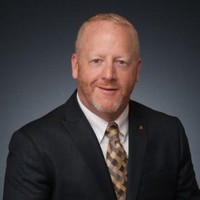
Greg Thornburg, AIC, CIA, CIU – Executive General Adjuster
September 10th 2026
 Davies’ Executive General Adjusters are elite among Large Loss & Specialty claims adjusters in the U.S., handling the most complex and costly claims nationally and internationally. In this series, learn more about who they are, what they do, industry trends they’re seeing, and the most interesting project each has worked on to date.
Quick Background
Since 1991, Greg has held multiple roles in property claims, including supervisor, brand manager and general adjuster. He focuses on large commercial property losses across Florida. Greg has responded to over 20 hurricanes and frequently serves as a market adjuster for major accounts. He serves as an umpire and has testified on building damages.
Home: North Port / Sarasota, Florida
Region: Florida
States Covered: Florida
In this Q&A, veteran catastrophe adjuster and appraiser Greg shares insights from decades on the front lines of complex claims.
Q&A
What stands out most in how field adjusters are expected to coordinate with carriers and policyholders now?
Compared to when I first started handling hurricane claims in the early ‘90s, the technology available today has improved communication a lot.
Most of our clients now use software that allows adjusters to communicate directly with all policy holders, often while they’re still in the field.
The most critical information carriers want to track is tied to first contact with the policyholder. They need to know when contact was made, when the property inspection is scheduled, the expected reserve and anticipated payout, and the status of the claim overall.
Because the technology is better, field adjusters are expected to constantly add those key data points for every claim. So adjusters face significant pressure to keep files updated, moving, and resolve claims as quickly as possible.
How do prefer to communicate with clients during complex claims?
I like emails and claims software because it opens the door for a documentable exchange of continuous communication between the insured and the local field adjuster as to where are we at in the process after the initial inspection. “Hey, it was great meeting you today. I’m very sorry about your loss. Here are the next steps I’m taking.”
How do you spend most of your time during a claim?
Overall, I’d say half my time I’m actually in the field. The other half I’m overseeing the work of our many adjusters.
More than half of my time is attributable to our larger commercial account claims where I serve as the market adjuster. During Hurricane Ian, one of my accounts had more than 650 buildings damaged on one claim. We used a lot of CAT adjusters, who all reported to me. Then I put together a master report to send to the market, which is the group of insurers.
You’re an appraiser—why are appraisers necessary, and what does your role entail?
Appraisals are basically a tool in the policy for both parties in the contract—the insurer and the insured—to resolve their differences without having to go to court.
Years ago, the courts decided too many insurance claim disputes were ending up in court. They developed the Appraisal clause to remove the parties that had been participating in the claims adjustment and independently assign individuals from the outside to put a fresh set of eyes on it.
I write an estimate, the opposing appraiser writes an estimate, then we meet and try to work it out. If we can’t reach an agreement, then we have to mutually select an umpire, which is a third person. Sometimes we have to ask the court to appoint one for us. And then we have what’s called a panel meeting, which is the two independent appraisers and the umpire to reach an agreement. Only two out of the three need to agree on the final Award.
Given your experience testifying on building damages, what documentation standards do adjusters most often fall short on that later become legal vulnerabilities?
We as an industry use what’s referred to often as a line item unit cost-based estimate systems. Xactimate is probably the most commonly recognized system for insurers, restoration vendors and public adjusters.
These platforms really help to complete a detailed line-by-line, multiple page estimate.
The times I have testified, damages were being argued where the other side presented a contractor’s estimate that doesn’t have that type of detail.
We’ve all have seen written estimates from contractors for everything from home improvement to roofing. And we wonder how they came up with that number, but we don’t really know. And they don’t really want you to know, because there’s always the concern about revealing how much profit they’re making off of this versus what’s a real cost.
With the estimating systems we use, there’s no hiding any of that. It’s all right out in the open for everybody.
If you’re going to base a settlement off something, it’s better to have it be data supported in computerized estimates.
Or, if you have a real-life licensed contractor who says “Yes, I can complete this work for the amount of money the insurance company has proposed, I agree to and I can complete the work for that amount of money.”—that’s where I find that normally the courts will find in your favor, because what you have suggested is fair and reasonable.
What’s the most complex project you’ve worked on?
I handled a large gas explosion that unfortunately occurred at an apartment complex, the explosion occurred in a boiler room where two large three-story commercial buildings were located. There was a gas line leak that we suspected came from the local gas company, which I learned during that process is regulated by a federal entity that I would never have imagined had anything to do with the transportation of gas from one area to the next.
The insurance company I was working for at the time specialized in residential apartments, and they insured both the first-party damage and liability coverage, which is rare.
So you’re investigating from the perspective of: what caused the explosion, and is it something we did wrong? Obviously the insurance companies engaged counsel quickly at my direction, which is pretty common. I had to deal with the ATF. I had to deal with the NTSB. The gas company was involved, power company, and owners of the building. We had our own investigative fire Marshall, and they were working closely with the federal officials and the local fire Marshall officials. News stations were camped out.
That claim lasted several years, and it really was gut-wrenching because there were so many injuries and fatalities. It was certainly one I’ll never forget.
Get in touch with Greg to learn more about his service regions and capabilities, and learn more about our overall Specialty Risk Division solutions.
-
June 24th 2026
EGA Insights: Role of Adjusters in Navigating Hurricane & Tornado Deployments
Davies’ Specialty Risk Division Executive General Adjusters are elite among Large Loss claims…
-
June 4th 2026
Meet Our EGAs: J. Abraham Hanze—Coast-to-Coast Complex Claims & Specialty Risk Adjuster
Davies’ Executive General Adjusters are elite among Large Loss & Specialty claims adjusters in the…

-
August 6th 2026
Meet Our EGAs: Mike Klein—Mid-Atlantic Adjuster, Umpire & Roof Regulator
Davies’ Executive General Adjusters are elite among Large Loss & Specialty claims adjusters in the…