EGA Insights: Role of Adjusters in Navigating Hurricane & Tornado Deployments
 Clay Sheffield, EGA – Gulf Coast Region
June 24th 2026
Davies’ Specialty Risk Division Executive General Adjusters are elite among Large Loss claims adjusters in the U.S., handling the most complex and costly claims in their regions. In this series, learn more about the industry trends they’re seeing.
In this Q&A, Florida Panhandle-based Clay Sheffield shares the issues and obstacles EGAs need to address to successfully navigate major hurricanes and tornado losses for carriers.
Claims Timing & Communication
There’s typically a delay between the storm and when the claim is filed. Furthermore, reaching the insured can also be a challenge, especially the closer you get to the coast. For instance, during Hurricane Michael, all of a specific cell phone carrier’s service and internet were “down” in the Panama City to the Port and St. Joe area.
We have a lot of people who rely on their internet service and cell phones for their main form of communication, so that can make it difficult to reach the insureds and contractors to get to work on the claim immediately after the disasters. But we persevere and get the job done.
Road Closures, Reroutes & Lodging
As part of gathering background information, we need to determine if there are road closures or other hurdles to getting to the locations. A lot of our areas are accessed by bridges or waterways that may have been changed substantially by the catastrophe. We had quite a bit of that in South Florida, trying to get to areas that had to be reached via a ferry or bridge.
During Hurricane Katrina, I-10 was down to one lane of traffic going into Mississippi. I was lucky enough during that storm to be able to use a pop-up camper and stay in a campground just inside the Mississippi state line. So that position helped quite a bit.
Mitigating the Damage
Once we are able to communicate with the insured, we explain our role in the claims process, try to determine the facts of loss, the extent of the damage, and give them examples of ways to mitigate the issues that are happening; if their roof is gone, if they have flooding, and everything in between. We also try to get them connected to a proper mitigation or restoration services company through approved means, or at the very least share that those companies exist if they don’t already know about them.
Extra Expertise
When you inspect the loss and note the extent of the damage, you can determine what kind of expert you may need. You need the right people “in the room,” and that can be specialists like structural engineers, cause and origin investigators, specialty contractors, building systems experts, and more.
Public Adjusters
Public adjusters (PAs) haven’t been around for long, but they’re here, and more are coming because people have beach houses or vacation condos that are secondary properties.
PAs don’t represent the insurance carrier—they represent the insured and hold a different license than an independent adjuster. A lot of times, when a person or company has a property in a state they’re not based in, they don’t want to allocate additional resources to trying to meet with the insurance adjuster. So they hire a PA to attend on their behalf, and be their “eyes and ears,” and estimate the damage, which sets the basis for their claimed damage.
So, you want to find and line up all of the information to adjudicate the claim. Again—if there’s a business income loss—when you’re getting to that size of a claim, you want to have all your ducks in a row to make sure you’re going to have the proper outcome for the insured and the carrier.
Aligning Stakeholders
A claim can get even more complicated during a widespread catastrophe. During Hurricane Katrina, I had instances where four claims were made for one property…by the insured, agent, broker and carrier, meaning there were different adjusters all trying to go out to see the same loss. This is where communication, relationships and expertise are critical to ensuring successful claims handling in a complex environment.
Learn more about our Specialty Risk Division or get in touch with Clay Sheffield.
About Clay
Clay Sheffield
IICRC WRT-Certified
Since 2000, Clay has served as both a commercial and residential staff carrier adjuster and an independent adjuster. His claims expertise includes damage due to fire, numerous hurricane deployments, tornadoes, hotels and hospitality, multi-family, mobile homes and high-value residential. His largest property loss project to date was $4.5 million. He is licensed in seven states along the Gulf Coast.
-
June 4th 2026
Meet Our EGAs: J. Abraham Hanze—Coast-to-Coast Complex Claims & Specialty Risk Adjuster
Davies’ Executive General Adjusters are elite among Large Loss & Specialty claims adjusters in the…

-
March 5th 2026
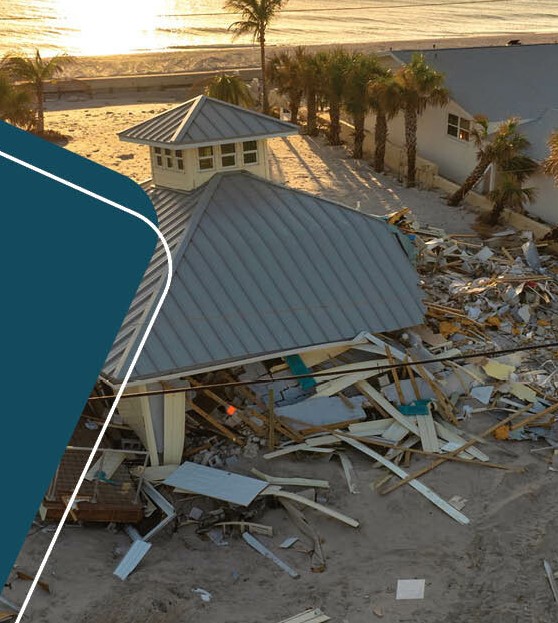
Be Ready to Scale: 5 Strategies for Proactive CAT Claims Management in 2026
Proactive planning for CAT events by insurance carriers is crucial for successfully managing increasingly unpredictable and high-volume claims,…
-
March 3rd 2026
How Commercial Loss Control Surveys Reduce Risks & Costs for Insurers/Insureds
Inflation, tariffs, construction costs, labor shortages, material and service delays, severe weather—you name it, and it’s piling up on commercial insurance carriers and their insureds. So, not surprisingly, U.S. commercial…
-
August 6th 2026
Meet Our EGAs: Mike Klein—Mid-Atlantic Adjuster, Umpire & Roof Regulator
Davies’ Executive General Adjusters are elite among Large Loss & Specialty claims adjusters in the…
-
August 19th 2026
Meet Our EGAs: Jason Smith—Mid-Atlantic Adjuster, Appraiser & Umpire
Davies’ Executive General Adjusters are elite among Large Loss & Specialty claims adjusters in the…
-
September 10th 2026
Meet Our EGAs: Greg Thornburg—Florida Adjuster & CAT Coordinator
Davies’ Executive General Adjusters are elite among Large Loss & Specialty claims adjusters in the…

-
September 23rd 2026
Meet Our EGAs: Greg Lingerfelt—Florida Adjuster & Appraiser
Davies’ Executive General Adjusters are elite among Large Loss & Specialty claims adjusters in the…
-
October 6th 2026
Meet Our EGAs: Kyle Markowitz—National General Adjuster
Davies’ Executive General Adjusters are elite among claims adjusters in the U.S., handling…